

Termites
Termites
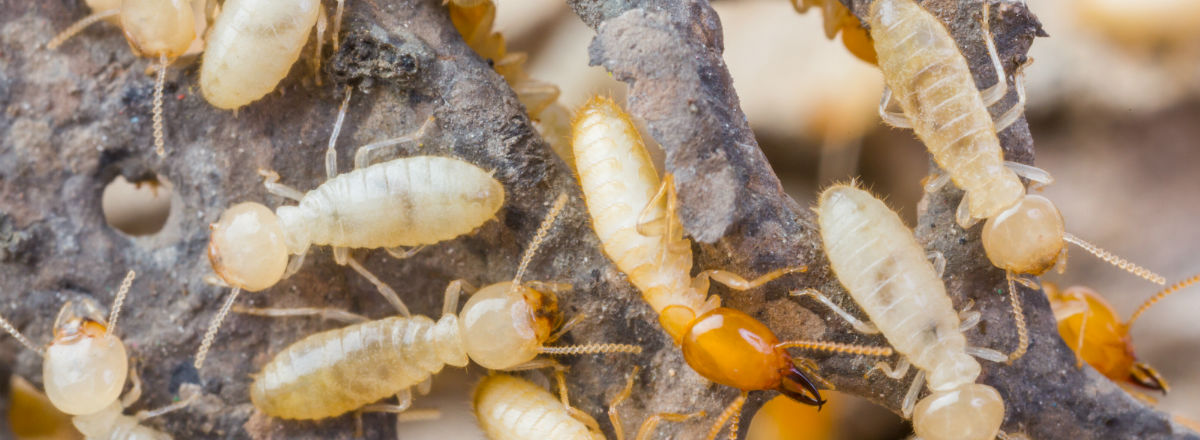
Termite colonies may range from a few hundred to over a million individuals. A subterranean termite colony consists of individuals of various castes, viz. queen, king, workers and soldiers, primary and secondary reproductive.
Queen:
Queen is the most important member of the termite colony and regulates the functioning of the colony. After mating, the queen produces eggs which may sometimes be as many as 30,000 a day.
Termite Eggs & Nymphs:
Eggs and nymphs are taken care by workers
Workers:
Workers build nest, locate and collect food, bring food to the nest, feed all members of the colony, tending the young ones, etc.
Primary reproductive:
Once the termite colony is mature, the queen produces primary reproductive which take mating flights and become kings and queens to start a new colony in other location
Secondary reproductive
These individuals resemble queens and kings and can take over the function of reproductive queen, should anything happen to queen.
Behavior:
Termites are cryptic in behavior and mostly work in unnoticed way. They are as small as ants, but when they work together, they have a proven reputation of large-scale damage to the wooden material in houses. Subterranean termites live in colonies in the ground and survive by consuming wood. They work in a methodical manner, starting with the formation of colonies. The workers in the colony find a source of wood by burrowing through the ground and making tunnels, they bring back the food to feed other members of their colony. Termites don’t just cause cosmetic damage, they may consume into the very structure of the house, wooden beams that support the structure, ceiling joists, wall studs and plywood panels on walls, door and window frames, wardrobes, kitchen cabinets, beds and all the articles that are made of wood, plywood or that contain cellulose (including gypsum boards). Termite-damaged wood is hollowed out along the grain, with bits of dried mud or soil lining the feeding galleries. Occasionally termites also bore tiny holes through drywall or plaster, accompanied by bits of soil around the margin. If termite inspection reveals a superficial termite damage, chances are high that there is more damage beneath and it is difficult to determine how long the colony has been established in that area/ home.
Risk:
Termite is a major pest of properties, and the potential for termite infestation is huge due to growing urbanization and construction activities. Termites has the potential to damage anything which contains cellulose such as wood, paper, cloth etc.